

Katie Uhlaender: Athletes risk paying the price if Protect College Sports Act is passed
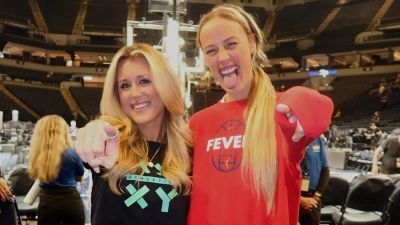
The team behind Riley Gaines' lawsuit against the NCAA and Brooke Slusser's lawsuit against the Mountain West break down what the recent Supreme Court ruling on women's sports means for their legal efforts.
The United States Olympic and Paralympic Committee sent out an email asking athletes to support the Protect College Sports Act (PCSA). It is being marketed as a way to protect college sports, but the real question should be: who is protecting the athletes?
Without athletes, there is no sport.
Giving absolute power to a centralized institution feels more like an economic cartel than fair competition. And it will be the athletes who pay the price.
I PLAYED IN THE NFL. WE DON’T WANT WASHINGTON TRYING TO FIX COLLEGE SPORTS
Five-time Olympian Katie Uhlaender poses for a photo during the 2018 U.S. Olympic Team media summit at the Grand Summit Hotel on Sept. 25, 2017. (Kevin Jairaj/USA TODAY Sports)
Fair competition is what makes sport great. The PCSA gives the National Collegiate Athletic Association (NCAA) complete control over who gets to compete. Is that fair to the athletes and fans who pay to watch and participate?
As a five-time Olympian, I have spent more than two decades competing in a system that promised fair competition and athlete protection. Like every athlete, I trusted those institutions to uphold the integrity of sport. Too often, they haven’t.
ZERO BS. JUST DAKICH. TAKE THE DON'T @ ME PODCAST ON THE ROAD. DOWNLOAD NOW!
In 2014, Russia was proven to have cheated in the Sochi Olympic Games. I was awarded an Olympic medal on paper, only to have mine – and 27 others – returned to Russia through a flawed arbitration process. Leading into the 2026 Olympics, an independent tribunal found that Canada
Related News