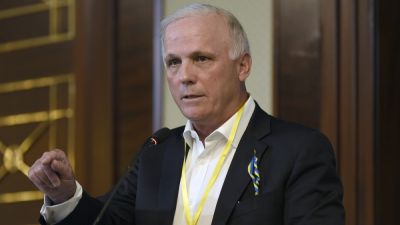


Goal of the Transport Community is full integration of transport markets so there is no difference in how transport operates in the EU and candidate countries – Permanent Secretariat Director
Exclusive interview with Director of the Permanent Secretariat of the Transport Community Matej Zakonjšek for Interfax-Ukraine
By Iryna Somer
In Ukraine, only professionals are familiar with the activities of the Transport Community (TC), and even with its very existence. At the same time, the TC is an important instrument of the European Union in matters of mobility and integration of transport markets of candidate countries into the European one. This concerns the implementation of legislation and, accordingly, standards across road, rail, inland waterways and maritime transport, as well as in airports (excluding aviation itself).
The TC was established in October 2017 by EU member states and six Western Balkan partners at the time—five of them EU candidate countries (Albania, Bosnia and Herzegovina, Montenegro, North Macedonia and Serbia), while the sixth, Kosovo, is not recognized by a number of states, including Serbia, Bosnia and Herzegovina and Ukraine, and does not have candidate status. In 2022, three additional candidate countries—Ukraine, Moldova and Georgia—joined as observers.
The TC works directly on the gradual extension of the EU’s core transport network—TEN-T (Trans-European Transport Network)—to the Western Balkans, and since July 2022 to Ukraine and Moldova. TEN-T consists of three layers: the core network (to be completed by 2030), the extended core network (by 2040), and the comprehensive network connecting all EU regions (by 2050).
A Permanent Secretariat was established in Belgrade to ensure the functioning of the TC, headed by Slovenia’s Matej Zakonjšek. This is his first interview with Ukrainian media.
Q: Do you see the TC’s work as duplicating that of the European Commission, which is
Related News