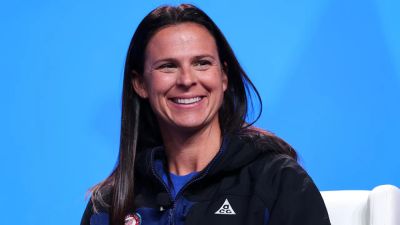


Despite decades of initiatives, gender equity among high-performance coaches remains an Olympic dream
At the 2024 Paris Olympics, Team Canada sent its largest women’s contingent in history – making up more than 60 per cent of the athletes. Yet, the sidelines told a different story: only 19 per cent of the coaching staff were women.
For the Milano-Cortina Olympics, that figure is projected to be near 10 per cent.
Despite decades of gender equity initiatives, these coaching figures have remained stagnant. The lack of progress raises a question: was the federal government’s 2018 commitment to achieving gender equity across all levels of sport by 2035 a realistic goal?
While women in sectors outside of sport have seen gains, elite sport remains an insulated environment. Family responsibilities, a culture that narrowly defines leadership, and the constant questioning of female authority continue to push talented coaches out of the profession.
“The leadership of sport hasn't changed,” former Sailing Canada coach and Olympian Lisa Ross said. “It is still of a generation that doesn't see women competing with men, being alongside men, or hearing them as leaders.”
Since 2016, women have consistently made up less than one-fifth of Olympic coaches for Summer Games; for Winter Games, roughly one-10th. Canada slightly outperforms the global Olympic average of 13 per cent, despite spending less on high-performance sport than the U.S. or the U.K.
This international success may be the result of million-dollar investments into programming aimed to support women’s coaching development. In 2022, the federal government renewed $25.3 million dollars over three years for gender equity in sport, with part of that funding dedicated to increasing the number of women in coaching and leadership positions.
The secretary of sport, former Olympian
Related News