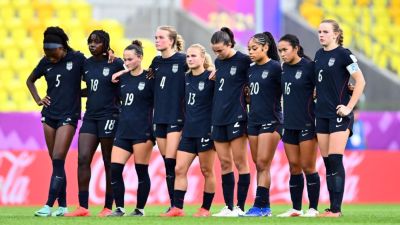


Canadian women's team makes 2nd appearance in international event as blind soccer continues to grow
The first thing you notice about blind soccer is the noise.
An audible ball rattles as it moves across the field, filled with small bells that jingle for everyone on the pitch to hear. The rest of the game runs on sound, too. Five players take the field for each side, with every outfield player wearing eyeshades to ensure those with some remaining sight have no advantage over teammates with none.
The sighted goalkeeper directs players from the back and a guide behind the opposing net calls attackers toward goal. Any player closing in on an opponent has to shout voy, Spanish for "I go," to warn them before the two collide.
It is a version of soccer that looks familiar only until the game begins. For Canada's women's blind national team, that unfamiliarity is part of the challenge. The program has spent the better part of a decade introducing Canadians to a sport many have never seen, while slowly building a competitive team of its own. This week, the team faces Argentina, Mexico and host Brazil at the IBSA Women's Blind Football American Championship, marking this as Canada’s second international competition. The event runs Sept. 3-9 in São Paulo.
When Matt Greenwood began working with the sport in 2017, there were eight recreational players in Canada. He estimates there are now about 30 competitive players nationwide, drawn from workshops and community sessions that have introduced the sport to more than 3,500 people, roughly 20 per cent of whom were born visually impaired or legally blind, with the rest losing their sight later in life.
Captain Hillary Scanlon is among the latter. She lost her vision unexpectedly in 2016, having played competitive soccer in Peterborough, Ont., as a teenager. It had always been her
Related News